
"Danville can at last boast of a restaurant": 130 years of eating out in Danville
A railroad hotel, a saloon that sold ice cream during Prohibition, a one-man Wild West town, a Chinese restaurant run by two chemical engineers, and the dining room from Mrs. Doubtfire.
By Tri-Valley Today · October 20, 2026 · Danville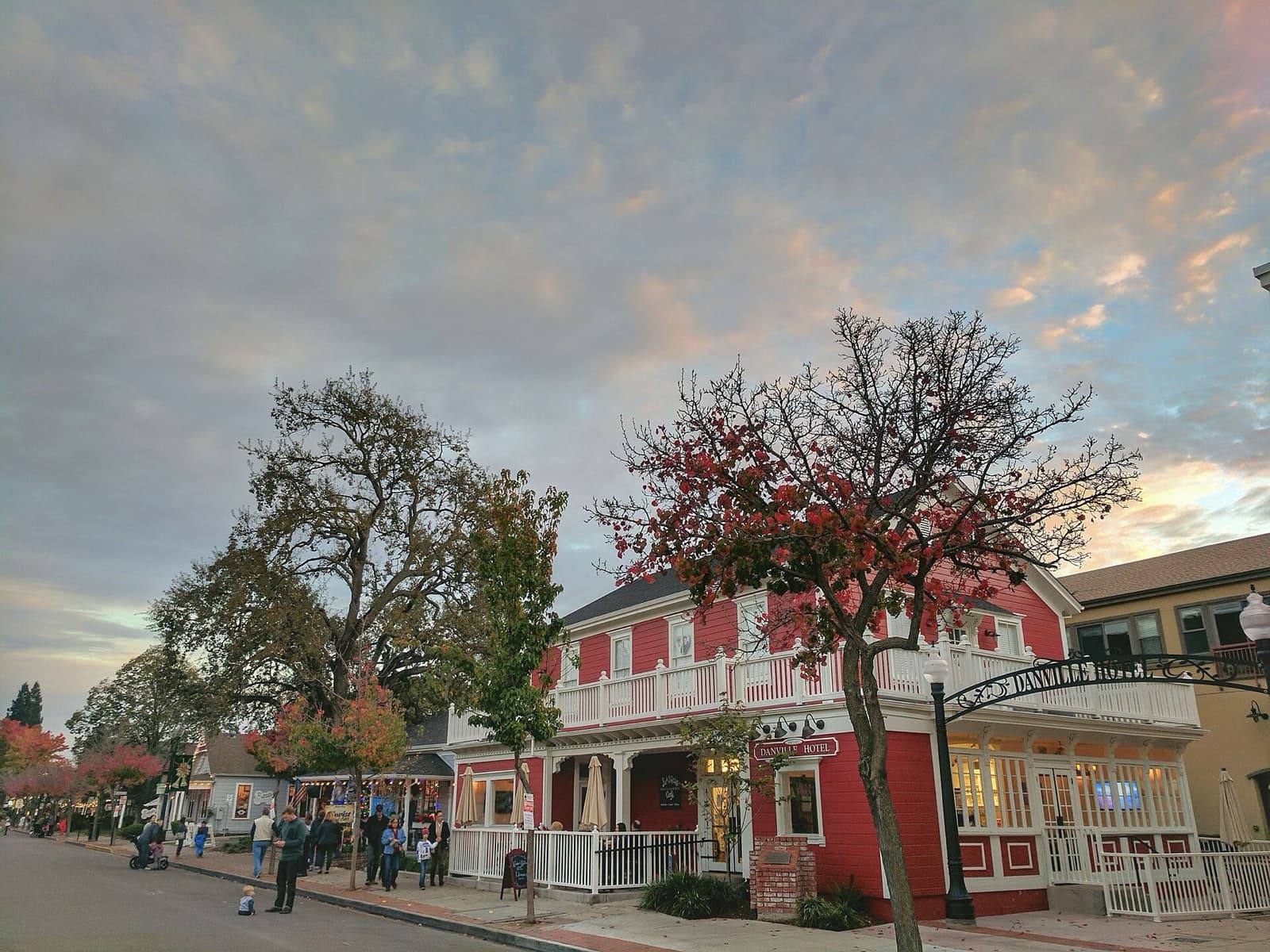
Walk down Hartz Avenue today and there's a restaurant every few steps. In 1892 the county paper greeted a single new dining room with relief: "Danville can at last boast of a restaurant." Here is how the town got from there to here.
1858: a boarding house
Danville's first place to eat was Henry Harris's boarding house at the north end of Front Street, opened in 1858 when the valley was all farms and ranches. In 1860 the town's first post office opened inside it, with Harris as postmaster. It burned down on July 9, 1873, a date the Contra Costa Times recalled in 1976 (A Step Into the Past). (Danville San Ramon)
1892: the railroad brings a restaurant
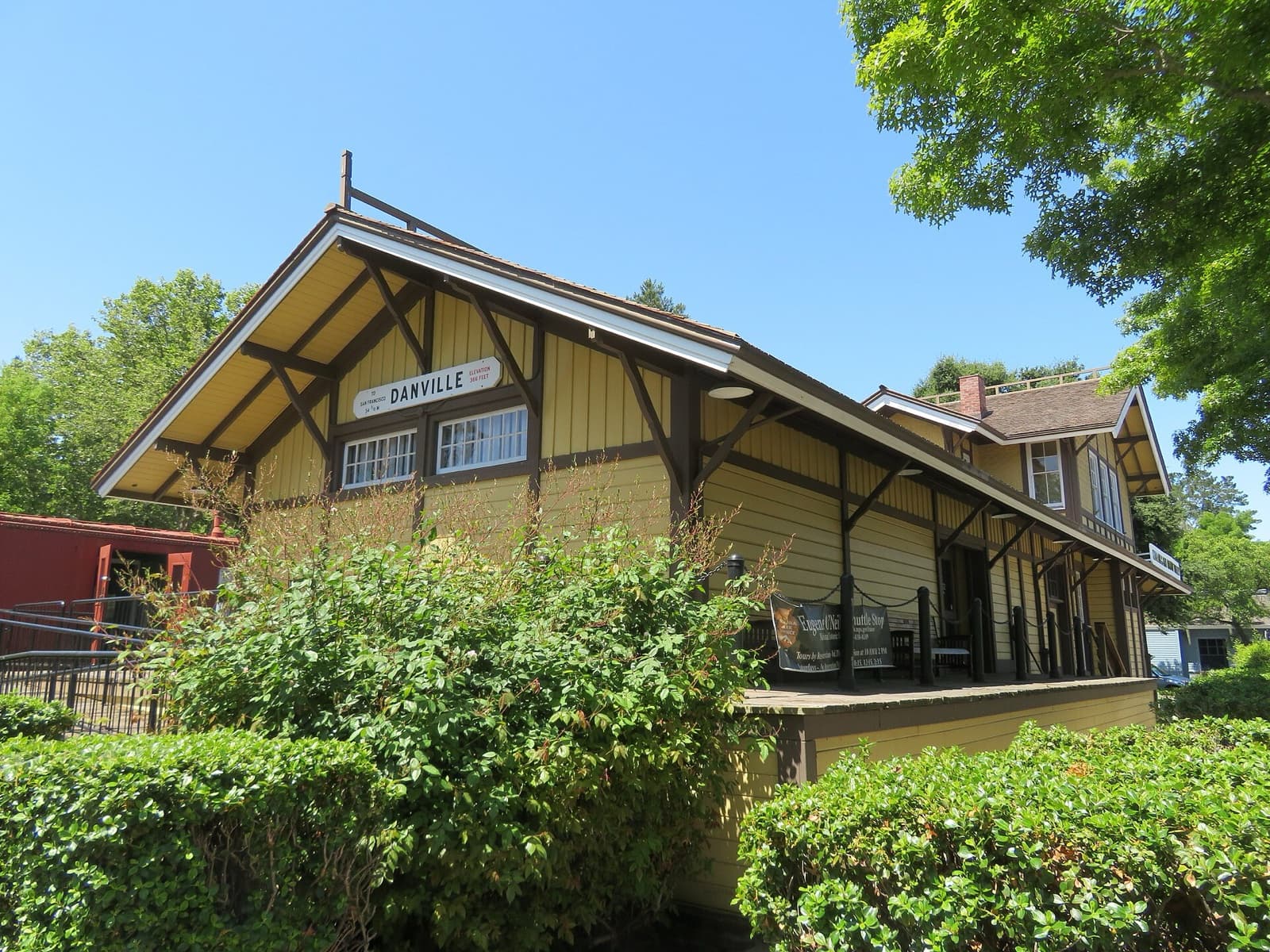
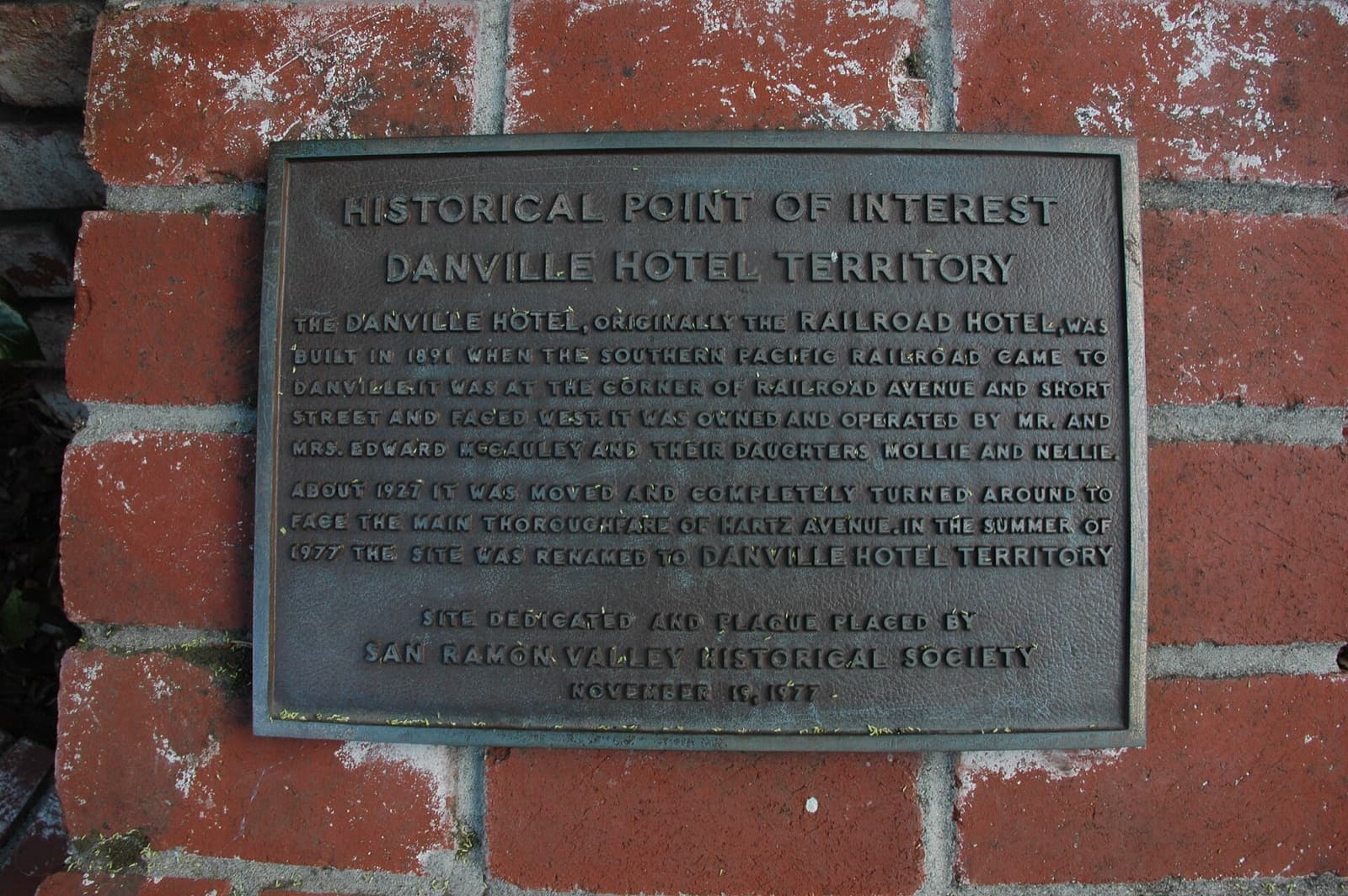
The Southern Pacific reached Danville in 1891, and Irish immigrants Edward and Mary McCauley built a hotel across from the depot for train passengers, salesmen and railroad men. On Nov. 3, 1892, the Contra Costa Gazette wrote: "Danville can at last boast of a restaurant." Mrs. McCauley did the cooking, and her pies were famous. Locals called the place the Railroad Hotel, or the McCauley Hotel and Grill. (Danville San Ramon)
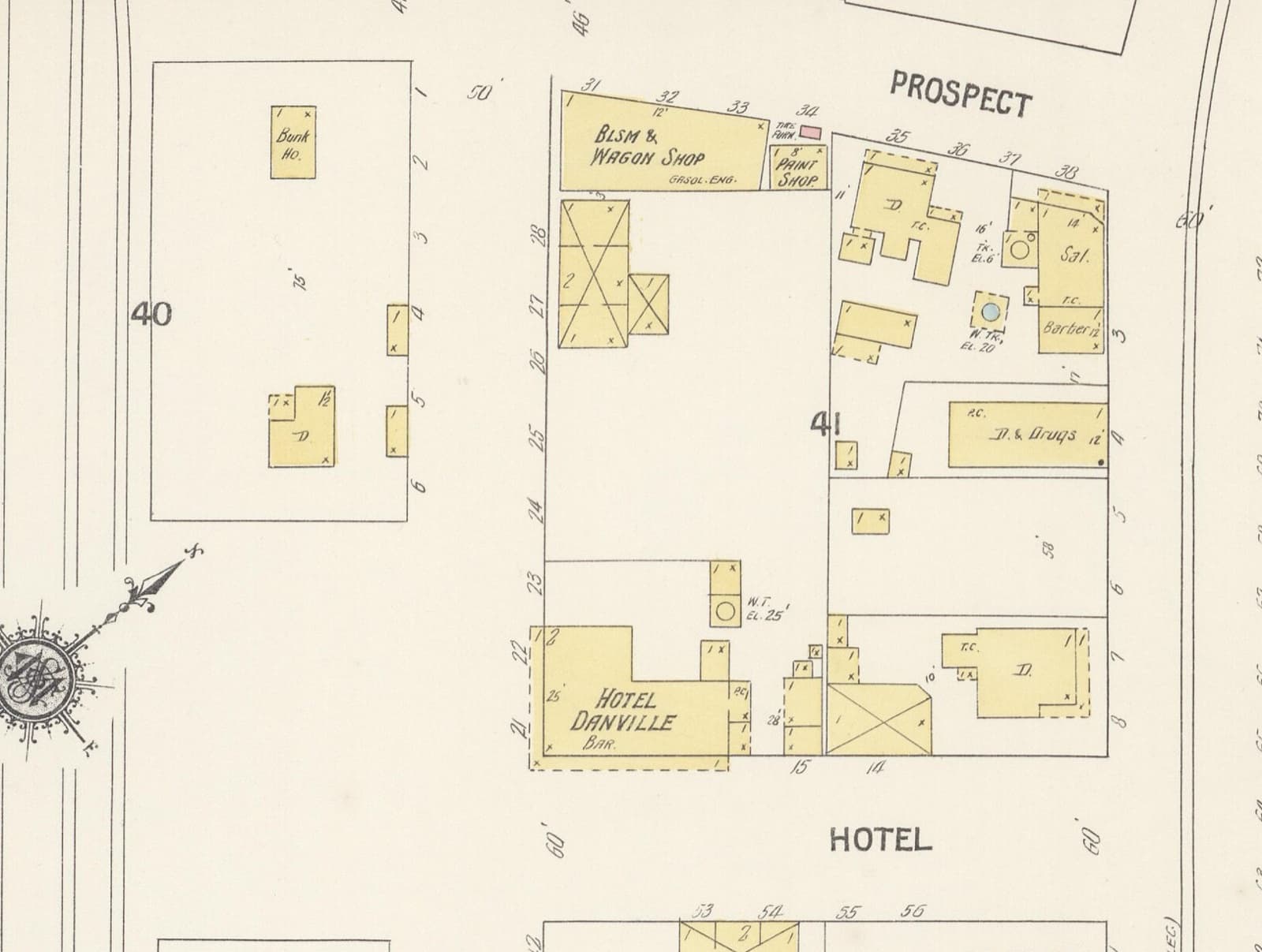
Once the trains came, Hartz Avenue filled in with a bank, a drug store, a saloon, a doctor's office and a Chinese laundry. (Town of Danville)
1907: the saloon that sold ice cream
Hiram Elliott opened a saloon at Diablo Road and Front Street in 1907 and moved it to Hartz Avenue in 1912. When Prohibition arrived, the law-abiding Elliott turned it into the Danville Ice Cream Parlor; when Prohibition ended, it went straight back to being a bar. Longtime bartender Dale Stockbridge bought Elliott's in 1995, and it is still known for cold beer and low prices. (Bay Area Telegraph)
1927 to the war: a turned-around hotel and a German chef
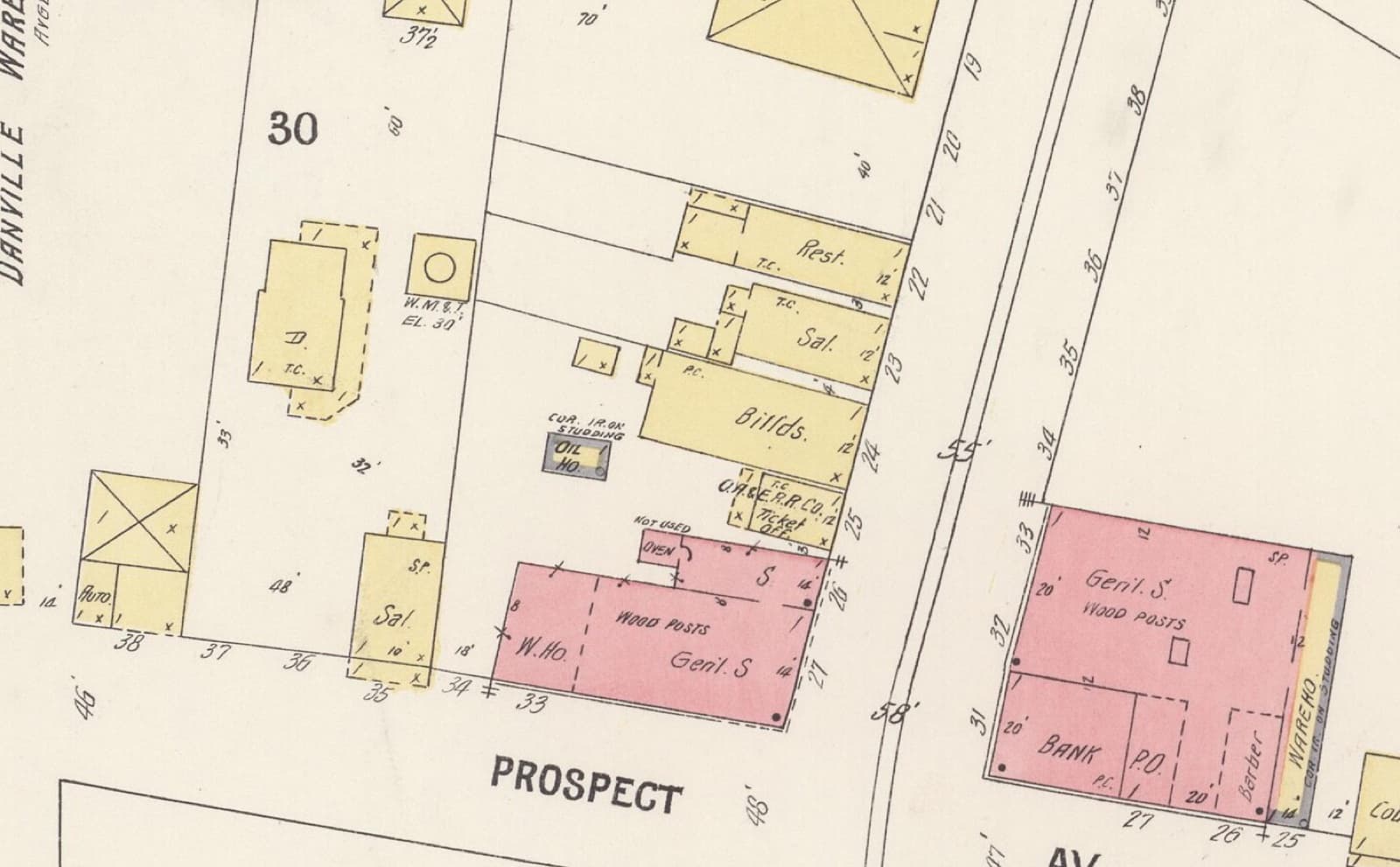
By the 1920s Hartz Avenue was the main street, so around 1927 the hotel was moved and turned all the way around to face it. (Contra Costa Times, Dec. 10, 1976)
In the 1930s the hotel stopped taking overnight guests. The McCauley daughters leased it to German chef Paul Zeibig, who turned it into the Danville Hotel Restaurant, with fine dining and a bar, and drew diners from as far as San Francisco. Some say he strolled Hartz Avenue in his chef's hat. The Bay Bridge (1936) and the Caldecott Tunnel (1937) made a drive out to Danville for dinner easy, until wartime gas rationing emptied the tables. (Danville San Ramon, 2009; Danville San Ramon, 2005)
The 1950s and '60s: a one-man Wild West
Russel Glenn took over the hotel in 1952. He painted it red and white, parked a covered wagon at the door and built the "Virginia City Patio" out back, a ghost town of false fronts: a jail, a bank, a general store, a livery stable, saloons, and a "Chinese laundry." Sixty years after a real Chinese laundry worked on Hartz Avenue, it had become a stage set. (Danville San Ramon)
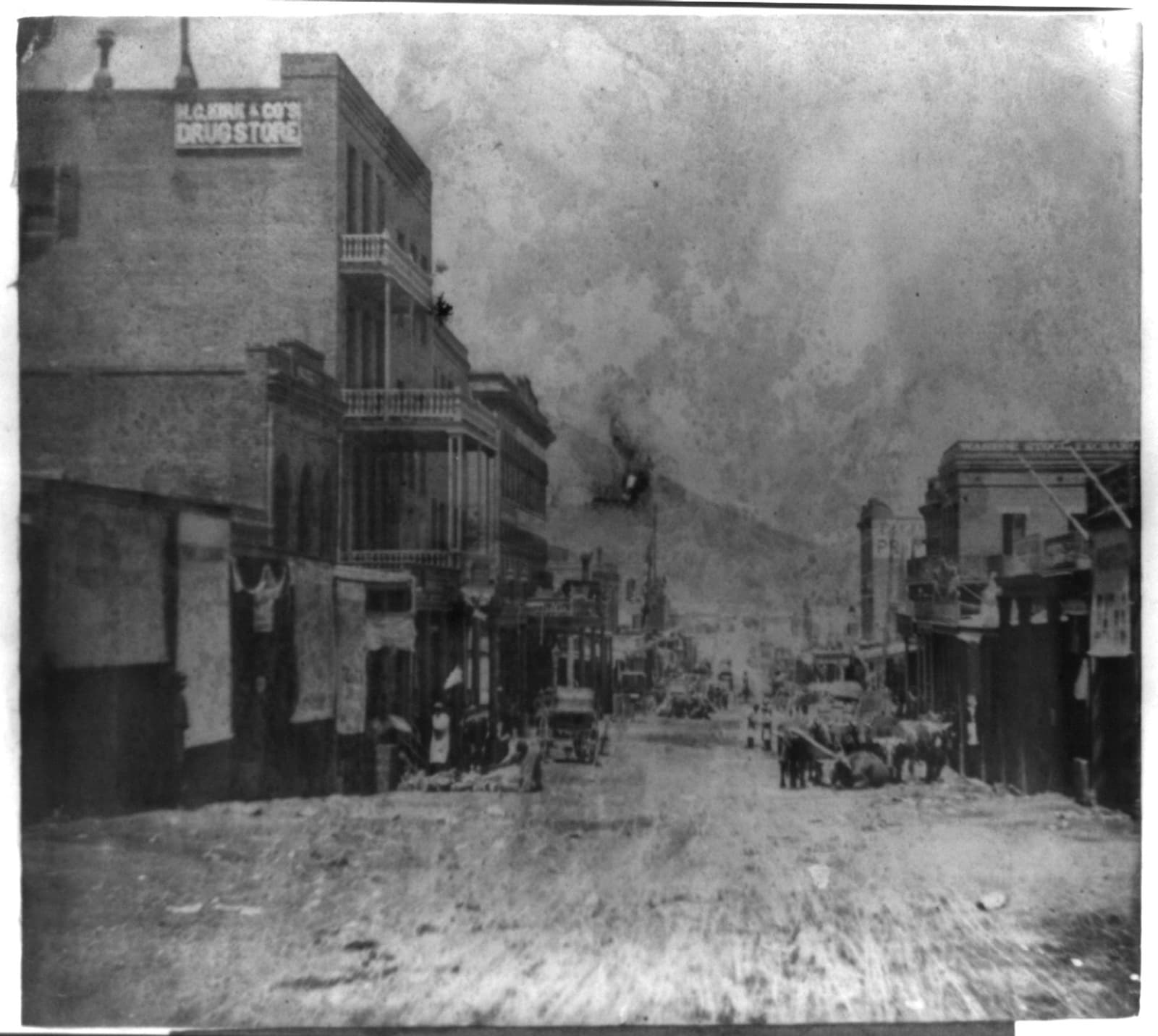
Glenn and a few merchants formed the "Confederacy of Danville" to give all of downtown a frontier look, with hay wagons at each end of town carrying a "Danville – 1858" sign. Not every shopkeeper went along, and the local editor later said the Old West period lasted about a year. In 1965 Glenn opened the Silver Dollar Room, a Victorian banquet hall for 300 designed with two Hollywood set designers. He grew a beard and called himself "The Retrogressionist." Old-timers remember silver dollars set into the bar. (Danville San Ramon)
Also in 1952, a local family opened what is now the Old Towne Danville Bakery. (Visit Tri-Valley)
1975: the Iron Wok
In December 1975 a Chinese restaurant called the Iron Wok opened at 44 Church St. Its owners, brothers Leonard and Willard Tom, were chemical engineers who quit after more than 12 years to go into business for themselves, promising "the finest Cantonese and Continental cuisine in the San Ramon Valley." Restaurants weren't new to them: their parents ran a grocery in San Francisco that supplied major Bay Area restaurants. The paper's write-up took a paragraph to explain what a wok was. (*Contra Costa Times*, Dec. 5, 1975)
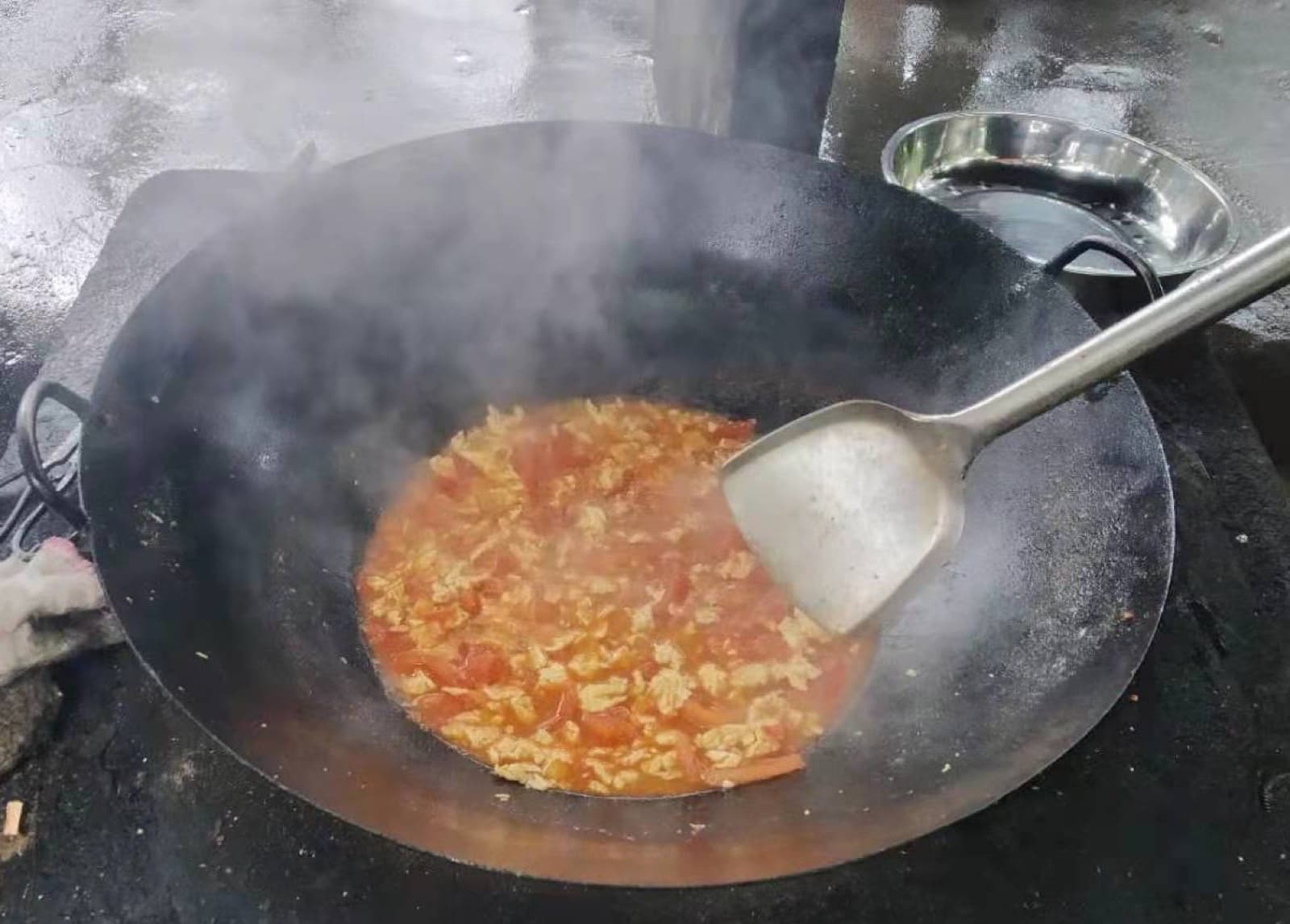
The Iron Wok held its corner of Church Street into the 1980s.
1976: the Danville Hotel Restaurant and Saloon
In mid-1976 Jerry Carter, a Danville resident, bought the old hotel block with his wife, Aileen, remodeled it to look like the late 1800s and turned the Silver Dollar Room into the Danville Hotel Restaurant and Saloon. The menu played up the early California theme: the "BIG S.O.B." (a slab of beef), a giant crab tostada, a lobster enchilada and a children's menu called "Little Miners." (Contra Costa Times, Dec. 10, 1976) The saloon later became the spot for the county supervisor's monthly community meetings. (Museum of the San Ramon Valley)
1989: from a wok to a bridge, then Mrs. Doubtfire
In 1989 Japanese businessman Kazuo Sugitani bought the Iron Wok site, tore down the old building and spared no expense on a new restaurant: five Japanese woods, Italian marble, European tile, 24-karat gold on the walls. He named it Bridges, for the bridge between East and West, and hired chef Alison Negrin, who had cooked at Chez Panisse. (*Oakland Tribune*, Aug. 23, 1989; Visit Tri-Valley) Six months after it opened, the San Francisco Chronicle called it "stunningly sophisticated and civilized." (*San Francisco Chronicle*, April 29, 1990)

In late summer 1992 Bridges closed for almost a month so Robin Williams could film the restaurant scene in Mrs. Doubtfire, where his character races between two tables, in and out of costume. The building was covered in tarps to fake nighttime, and Councilman Mike Doyle walked through a shot as an extra. Business doubled after the movie came out, and a poster signed by Williams still hangs on the way to the restrooms. (Danville San Ramon)
Today
The red Danville Hotel still stands. The block behind it was rebuilt as the new Danville Hotel, with restaurants, shops and homes, and opened in 2016. (Museum of the San Ramon Valley)
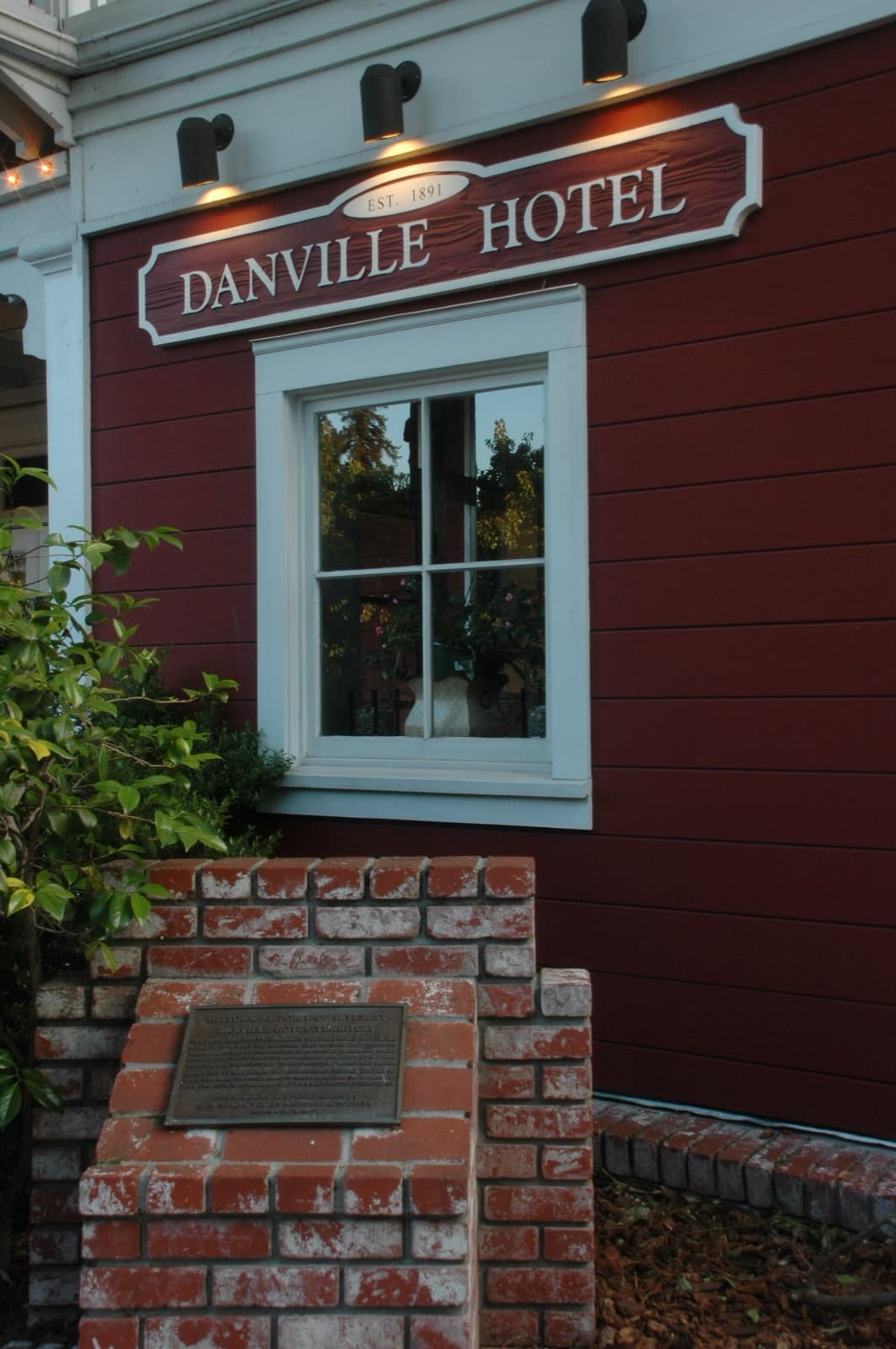
Much of this story is still open. Elliott's still pours cold beer on Hartz Avenue (Bay Area Telegraph), Bridges still serves at 44 Church St. (Visit Tri-Valley), and the 1891 depot across from the old hotel is now the Museum of the San Ramon Valley, where the rest of the town's history is on display (museumsrv.org).
From "at last a restaurant" in 1892, to a newspaper explaining the wok in 1975, to today's Hartz Avenue, it has been a 130-year meal.
Sources
- Contra Costa Times, Dec. 5, 1975: Wok it to me
- Contra Costa Times, Dec. 10, 1976: A Step Into the Past
- Oakland Tribune, Aug. 23, 1989: Bridges takes over the former Iron Wok site
- San Francisco Chronicle, April 29, 1990: Stunning Sophistication in Woodsy Danville
- Sanborn Fire Insurance Map of Danville, 1917 (Library of Congress), via Wikimedia Commons
- Museum of the San Ramon Valley: The Danville Hotel
- Danville San Ramon, 2009: Danville Hotel remembered with a monument
- Danville San Ramon, 2005: False fronts, a jail, the look of the Old West
- Bay Area Telegraph, Feb. 14, 2026: Inside the cowboy-era Danville dive bar
- Danville San Ramon, Dec. 22, 2010: Mrs. Doubtfire lives on in Danville memories
- Visit Tri-Valley: Bridges Restaurant and Bar
- Visit Tri-Valley: Old Towne Danville Bakery
- Town of Danville: Historic Danville